Back in 2008 French director Pascal Laugier proved just how
miserable and degrading horror can be. His grimy psych-horror Martyrs gave a
lot of us nightmares and made us pretty happy with the upbringing we had. This
year he unleashes his next feature The Tall Man starring Jessica Biel.
Anticipation is high and early reviews rave about this chilling drama cum
horror…
In a slowly dying mining town, children are vanishing without a trace , allegedly abducted by a mysterious figure known as “The Tall Man.” Town nurse Julia Denning (Biel) seems skeptical until her young son David disappears in the middle of night. Frantic to rescue the boy, Julia lives every parent’s darkest nightmare in this twisting, shock-around-each-corner
thriller.
Port of Shadows (Le Quai Des Brumes) is a film directed by Marcel Carné is 1930 It stars well-known early French actor Jean Gabin, who was best for his collaborations with Jean Renoir and Carné. The film shares it's cinematic town Le Havere with the recent of the same name. It's also one of the many predecessors to film noir like The Petrified Forest, M, Pépé le Moko (who also starred Gabin). It is perhaps the most grey film eer made, I don't mean that just cause it's black and white but the whole colour palette is very high contrast grey with very little black. The
film tells the story of an army deserter Jean (Jean Gabin) who hitchhikes to
the port town of Le Have. He meets a drunk on his first night in town and takes
him to a dive bar on the edge of the shipyard. He meets a girl Nelly (Michèle
Morgan) and a dog. Her ex lover goes missing, Jean and Nelly hook up, they have
to deal with her creepy godfather oh and there are some gangsters as well.
It’s one of the
key films of the French poetic realism movement of the mid 30s to early 40s
along with other legendary filmmakers like Jean Vigo and the previously
mentioned Jean Renoir. It was very much the link between German Expressionism
and the Film Noir of the 1940s and 1950s but was equally influences on the
French New Wave and the earlier Italian Neorealism. I’m a much bigger fan of
poetic realism than the more common socio-realism, which is very prevalent in
British cinema. It’s all very much studio based and much more it’s
aesthetically concerned then a amazing story, they stories all rather simple.
They also tend to share a world-weary view of the world, which is clearly
influential on the characters in British film noir.
The film is filmed
in glorious high contrast grey film stock, which is so foggy but in a beautiful
way, it’s spellbinding.Jean
Gabin is totally wonderful in the film, as is Michèle Morgan. It also features
the best performance by a dog (Sorry The
Artist). Carné uses really effective metaphor of a ship in a bottle to
symbolize the characters sense of entrapment. It was actually criticized by
government officials as helping the Nazis beat France because of it’s
negativity towards the state and the morals of the French Character.
Overall, it’s a
wonderful influential piece of proto-noir, which should be seen and cherished. It
has been recently reissued by StudioCanal on blu-ray and dvd and is certainly
worth tracking down.
Gore goes
global as Horror Channel serves up three slices of sinful celluloid in its World
SINema Season – three premieres that highlight taboo, terror and blasphemy
Fridays at 22:55 from 7 Sept,
2012
The
season kicks off on Friday Sept 7, 22:55 with THE DEVIL’S
BACKBONE (2001) from Spanish Pan’s Labyrinth director Guillermo Del
Torro.Beautifully shot and
immensely creepy the film explores two different types of horror – the very real
horror of war and the exploration of horror experienced through a child’s eyes
(Carlos), one of ghost’s and the supernatural.
Guillermo
has stated this is his favourite work so far, and was a 16 year labour of love.
It was influenced by early memories of seeing his uncle come back as a
ghost
and the
creepy spectre that appears to Carlos was based on the pale faced ghosts in
Japanese horrors like The Ring.
Next up
on Friday Sept 14, 22:55 is THE ANTICHRIST (1974), which
delves dangerously deep into the blasphemous aspects of demonic
possession.
Ippolita,
a young woman wheelchair-bound and sexually frustrated, finds herself under the
spell of Satan himself when she becomes victim to an ancestral curse of
witchcraft and possession. She
starts seducing local men, only to kill them and an exorcism seems to be the
only solution to stop the madness
The
controversial Satanic orgy scene will certainly have a few tongues wagging with
its implication of bestiality
The last
in the season on Fri Sept 21, 22:55, is one of the most absurd,
gruesome French horrors ever made – BABY
BLOOD (1990)
Yanka, a
young circus performer, is pregnant but morning sickness and fat ankles are the
least of her problems when a new leopard from Africa is delivered to the circus
– a beautiful beast hiding a hideous creature within.
And as
the months progress, Yanka suffers from an overpowering appetite... for blood.
Or rather, her unborn baby is screaming for it. And she is forced to kill and
kill again…
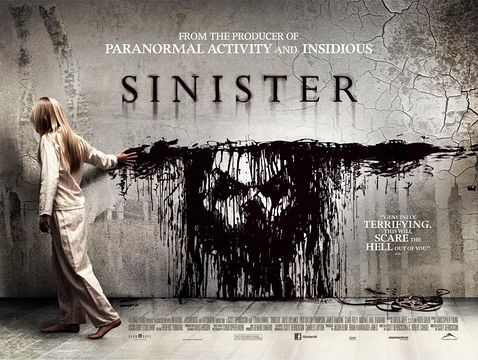
The “found footage” flick. Possibly the most derided genre of horror, even more so than the slasher movie these days. With film after film seeing light of day via DVD you’d think found footage films are heading for burn out. But then along comes Sinister. Playing on the “found footage” conceit, the movie is however less a found footage film than a film about found footage.
If Paranormal Activity and Insidious captured the imaginations of cinema audiences everywhere then Sinister is surely set to do the same. With a similar “found footage meets haunted house” premise to the aforementioned films, the movie tells the story of true-crime writer Ellison who, desperate to repeat the success of his earlier work, moves his family into a home where a horrific quadruple homicide took place (footage of which opens the film in a stunning fashion). Of course Ellison doesn’t tell his wife and kids the truth about their new home, however it doesn’t take too long for them to find out… Discovering a box of ‘home movies’ in the attic, Ellison spins the Super 8 reels, sitting stunned as the gruesome murder footage plays out. As he comes to realise that the murder he is investigating goes a lot further than just his house, he also realises the toll his investigation may take on his family.
When it comes to horror movies everything has already been done, from slasher movies to found footage films there really is nothing new under the sun. So it takes a lot for any new movie to feel refreshing and new. Thankfully Sinister is one such film.
Directed by Scott Derrickson, who was responsible for the better than average The Exorcism of Emily Rose, Sinister is a masterpiece film-making; not only playing on genre tropes but using them to spectacular effect. From the grindhouse style Super 8 footage of the grisly murders, to the creepy haunted house bangs and bumps, we’ve seen it all before but here it works – so much so that it made even this horror fan jump out of his seat a couple of times! Best of all the script, by director Derrickson and film critic C. Robert Cargill (aka Massawyrm from Ain’t It Cool News), doesn’t treat the audience like idiots. Characters spout lines that the audience are thinking and just when the events reach a terrifying crescendo Ellison moves his family out of the house! If you’ve ever seen a haunted house film you’ll know the feeling of shouting at the screen, almost begging the characters to movie out – here they do. It’s a very small thing but it’s just the tip of the iceberg in terms of the nuances found in the films fantastic script.
Ethan Hawke gives an astonishingly strong performance as crime writer Ellison, a man whose behaviour is less than exemplary. He lies (and keeps lying) to his family about the house; he lies about why, as his family falls apart, he is really forcing them to stay; and he lies to himself about his real motivations – money and fame rather than trying to solve the crime. However despite all that Hawke manages to imbue Ellison with a likeability – after all deep down he’s a man who’s only trying to provide for his family the way he knows how. Hawke’s performance also goes a long way to convince the audience of the believability of the more supernatural aspects of Sinister.
Speaking of which, the films “villain” Mr. Boogie, is on the surface yet another stereotypical movie boogeyman but between the skillful way in which the character is revealed, and later his true ideology, the cliche of a “boogeyman” can quickly been forgiven. Especially given the movies stunning final twist…
Sinister really is one of the best, and scariest, American horror films I’ve seen in years. Someone give Derrickson and Cargill the greenlight to make another – I’ll be first in the queue.
This was a review by Phil at Blogomatic3000
Rating:15
UK Release Date: 28th August 2012 (Frightfest) 5th October 2012 (UK&Irish cinema release)
Directed by:Scott DerricksonCast:Ethan Hawke, Vincent D'Onofrio, Clare Foley, Juliet Rylance,
The second film from the Manetti Brothers’ whose The Arrival of Wang
played Frightfest Glasgow and is scheduled as part of the Re-Discovery
Screen at London Frightfest 2012, Paura 3D (literally translated as Fear
3D) is billed as a 3D thrill ride into terror and whilst the film has
its moments (no matter how minor), it cannot compare to the sheer
brilliance of the Manetti’s sci-fi opus Wang.
Paura 3D tells the story of mechanic Ale, who after overhearing a
conversation between a wealthy customer and the garage owner, takes his
best friends, Simone and Marco on a trip to the wealthy owners Rome
villa intent on having a wild weekend in his luxury mansion. Bored after
raiding the fridge, swimming in the pool and playing video games one of
the trio decides to explore the house, never expecting what he finds in
the basement…
Lensed in 3D, but loosing nothing in 2D, Paura is a strange film.
Filled with a sleazy atmosphere, the film embraces all that is
exploitation – extreme examples of sex, violence and gore – only it does
so in a way that doesn’t allow the audience to connect with the film.
There’s no emotional investment in any of the characters, least of all
the three leads who are an unlikeable bunch and the script is less than
stellar. The films only saving grace IS the exploitation aspects, which
are nothing we haven’t seen before a hundred times and after a while
even those run out of steam, leaving a film that feels shallow and
uninteresting. The complete antithesis of The Arrival of Wang.
Personally it was hard to watch Paura 3D and not be a little
disappointed. After loving the Manetti Brothers’ sci-fi flick, seeing
them produce something so generic and so dated (this is the type of film
both Italy and the US were churning out during the slasher movie fad of
the 80s), is heartbreaking. Here’s hoping the brothers Manetti find
their mojo again for their next genre film…
The debut feature from screenwriter Eron Sheean, who was responsible for penning The Divide for Xavier Gens (which also starred Michael Eklund), Errors of the Human Bodyis a film that belies genre-specific categorisation. Part Michael Crichton medical thriller, part David Cronenberg body-horror, with a hint of the classic Frankenstein, it’s both a challenging and intriguing film – although it is not without its faults.
The film follows Canadian scientist Dr Geoff Burton (Eklund) who takes up a position at a scientific institute in Dresden, Germany, with the intention of continuing his research into random embryonic abnormalities – research borne out of a personal tragedy (the death of his infant son) that has haunted him for years. Hooking up with his former intern, Dr Rebekka Fiedler, now one of the top researchers at the institute, Burton becomes fascinated by her research into a regeneration gene, one that could have possibly saved his son. But it’s not only Dr. Burton who’s interested in her research as he finds out when he spies the mysterious and creepy Jarek (Lemarquis) using her formula on the mice in his basement ‘mouse house’. Racked by guilt over his son and fixated on Jarek, sure he’s plotting something nefarious, Burton steals one of the lab mice to run his own tests. However when his experimentation goes wrong and he’s bitten by the mouse, Dr. Burton becomes convinced he’s become infected, a human test subject for Jarek’s modified regeneration gene, and he might not be wrong…
Errors of the Human Body couldn’t be more timely. Playing on the fears of genetic modification and stem cell research, the film is a dark, often bleak, look behind the curtain of science, showing the true price of medical breakthroughs – doctors pushed to the brink, experimentation that many would say borders on the inhumane, and the possible future consequences of (medical) success. These themes, whilst central to the film, run parallel with the very human story of Dr. Burton, whose life and deeds have made him a broken man. Thankfully Eron Sheean cast the perfect actor for Dr. Burton in Michael Eklund. One of the best character actors working today (you’ll know the face even if you don’t know the name), it looks like Eklund really threw himself into the role of Burton and his commitment really gives the character a believability and an emotional resonance that grounds the film come it’s almost fantastical conclusion.
The film is not without its problems however. With an over-long running time, Errors of the Human Body suffers from too many endings and a third act that drags out the action to almost a snails pace. I understand that writer/director Sheean wants to show the gradual breakdown, both physical and mental, of Dr. Burton but that could have been achieved without a ridiculously long montage of him running through Dresden.
However despite the films issues, with Errors of the Human Body Sheean has managed to craft an interesting, intelligent thriller that never panders to the audience, never gets bogged down in medical mumbo-jumbo, and best of all never stoops to the usual “science gone bad” style story we typically see from these types of genre film. For that he must be applauded.
This Was a review from Phil at Blogomatic3000Rating:18
UK Release Date: 27th August 2012 (Frightfest)
Directed by: Eron SheeanCast: Michael Eklund, Karoline Herfurth, Tómas Lemarquis, Rik Mayall, Ulrich Meinecke
In more skilful hands Pablo Proenza’s Dark Mirror could have come off as an average haunted house story,
but loose direction and some seriously messy writing cement this feature as total
low-end nonsense. The story has potential on paper but the real problem comes
from an accumulation of bad features that quickly turn the viewer against the
film. The plot seems basic and hap-hazard, the story falls frequently into soap
opera, the acting isn’t too good, effects look cheap, and the story fails at
making us care one jot about anyone involved. Overall the film looks and runs
like your least favourite episode of Goosebumps.
The story starts as a Seattle family finally choose a house in South California to their liking,Debbie (Lisa Vidal) is drawn to the house due to its bizarre windows and the fact an artist lived there before them. Slowly, the house begins to reveal a
mysterious side as people connected to Lisa disappear and she notices a hooded
figure following her everywhere she goes.
The look of the film is a major issue. It frequently lets itself down through some cheesy camera movements that make it seem like the product of clumsy hands. Don't be fooled by the poster, the film never once achieves a dark tone as strong as that.
And unfortunately the duff vibe of the film seems to rub off on Vidal who dances between some pretty good moments and some God-awful ones. Admittedly any punchy scenes come in the last twenty minutes which are by far the most interesting of the piece.The finale seems almost a separate film, enjoying a good pace and some genuine thrills, still, bad editing and some plain silly nonsensical actions result in a mixed bag of an ending
A few interesting undeveloped ideas are skimmed past, but too few to rescue what, for
the most part, is a disjointed and joyless affair.
SCOTT CLARK
UK Rating:15
Release Date: 3rd September 2012
Directed by:Pablo Proenza
Tul-pa (from the Tibetan): meaning a magically produced illusion
or creation. The concept of a being or object which is created through
sheer discipline alone. It is a materialized thought that has taken
physical form.
Italian rock star turned director Federico Zampaglione made a splash in 2009 when his first film Shadow played to a packed audience at London’s Frightfest. Returning some three years
later and after teasing the film at Frightfest Glasgow earlier this
year, Zampaglione unleashed Tulpa on an eager and willing
audience. Word of mouth had built the film up to be one of the must-see
films of Saturday, and I for one wasn’t disappointed.
The film tells the story of businesswoman Lisa Boeri: she has a good
job, she’s well respected and at the top of her career but she keeps a
secret. By night she goes to a seedy club named Tulpa, owned by a guru
who teaches her his bizarre esoteric philosophy on finding spiritual and
psychological freedom by having anonymous sex with complete
strangers.However Lisa finds out her sex club partners are all being
murdered in horrible ways one-by-one by a black-gloved killer who seems
out to destroy her life. But Lisa can’t talk to the police for fear of
revealing her secret and ruining her career, so she has to unmask the
anonymous assassin herself…
Taking the tropes of 70s giallo and updating them for a modern audience, Tulpa is
an odd, yet fun, mix of the familiar and the new. Adding copious
amounts of sex (much more than many of the giallo of the Italian cinema heyday) and not holding back on the violence, Zampaglione throws in a
little supernatural edge in the form of Tibetan mysticism to create a
neo-giallo that would make even Dario Argento jealous.
Packed with some of the countries biggest stars, including Claudia Gerini in the lead role, Tulpa marks the return of the giallo to the forefront of the Italy’s cinematic
output. And from the gloved maniac’s first kill to the final reveal Tulpa is
both a nostalgic look back at a now much-maligned genre and a bold
statement on its future. All writ large on the screen by a director who
has an obvious love for the genre and the talent to see it through.
Found footage horror, V/H/S has completely revitalised a played-out, repetitive style of filmmaking with six chilling anthology tales. Ti West (House of The Devil), Glenn McQuaid ((I Sell The Dead) and Adam Wingard (A Horrible Way To Die) are just three of the directors to contribute to this chilling anthology.
V/H/S opens with a group of criminals assaulting young women and vandalising property. They are hired by an anonymous client to break into an abandoned house and obtain a mysterious video tape. The group begin to work their way through a series of terrifying tapes, each revealing a different short film.
V/H/S manages to fuse so many horror sub-genres together in an innovative and chilling manner, capturing all that fans love in the genre. However, this is not clear from the shaky onset, where teenagers victimise young women, whilst filmed on a handheld camera - it was a struggle to engage with this. As these young men break into the abandoned house and the horror starts, director, Adam Wingard completely pulls it together. This over-arching story is just as tense and disturbing as any of the segments that it flawlessly seems together.
The first segment from David Bruckner (The Signal) entitled Amateur Night follows three college freshmen with video recording spy glasses, hoping to pick up some easy girls and make a sex tape. However, one of the girls who has been brought back's behaviour is a little troubling. This chilling short film is thoroughly well developed, with some completely unexpected and unsettling gory twists.
This is followed by Ti West's Second Honeymoon, a tale of a loving couple staying at an isolated Texas motel whilst on vacation. However, when a creepy young woman starts banging on the door things take a shocking turn. West's short tackles the idea of home invasion, with the intruder filming the sleeping victims on their own handheld camera, showcasing a disturbing twist on handheld camera norms.
The third short, Glenn McQuaid's Tuesday The 17th follows four teens venturing into the woods, where gruesome murders previously took place. This may read like the traditional Friday The 13th teens in the wood style slasher, but McQuaid's killer is created with a completely innovative twist.
Joe Swanberg's The Strange Thing That Happened to Emily When She Was Younger proves to well-crafted, suspenseful ride. Swanberg's tale follows the Skype conversations of a couple, terrorised by ghosts. As a viewer we are thrust into dark, grainy rooms left to scan for the source of terror.
My personal favourite segment, 10/31/98 by collaborative group called Radio Silence proves to be a spectacularly crafted and completely unsettling piece of filmmaking. It follows four men looking for a Halloween party - they end up at a creaky old house with some macabre practices going on in the attic. Radio Silence allow the house to completely come alive, with walls moving and doors disappearing - it is a true visual feast of terror, fusing elements of The Amityville Horror with Rosemary's Baby.
V/H/S is a sure fire treat for horror fans, bringing a much needed spark of energy to the handheld camera style of filmmaking. Each segment is flawlessly crafted and diverse enough to maintain your interest for the near two hour run time. I would go as far to say that it is the strongest horror film of 2012.
Director Jaume Balagueró flies solo with Sleep Tight, a film that – like his most famous effort – once again takes place in a apartment building, however this time his film has more in common with the classic cinema of Alfred Hitchcock and Roman Polanski than the modern zombie horror of Balagueró’s [REC].
Sleep Tight follows Cesar (Tosar), the quiet, helpful and polite concierge of an apartment block in Barcelona. However his polite exterior hides something much more… sinister. Relishing in tormenting Veronica, an old lady who lives all alone in her apartment surrounded by her pets and at odds with one of the buildings younger tenants, Cesar spends most of his days plotting against Clara, a happy-go-lucky young woman with whom he has an unhealthy obsession. An obsession that, as the film progresses, gets crueler and deadlier.
It’s clear to see why many have already dubbed this the Spanish equivalent of a Hitchcock flick. Sleep Tight feels very much like the maestro of horror’s Psycho, with Spanish superstar Luis Tosar seemingly channeling Anthony Perkins’ Norman Bates. The film also has shades of Polanski’s early work, in particular Repulsion and, of course, The Tenant. It’s a credit to director Jaume Balagueró that whilst it is set in yet another apartment block, Sleep Tight looks and feels light years away from [REC], yet imbues the same creepy atmosphere.
Like the aforementioned classics of the genre, Sleep Tight succeeds thanks to the performance of its central actor, in this case leading man Luis Tosar. A Spanish acting superstar, Tosar is best know outside of his home country for Miami Vice, the Michael Mann helmed remake of the 80s TV show. Here he gives nothing away in his role as Cesar, playing his emotions and his motivations close to his chest until the films story, and Cesar’s plans for Clara, spiral out of control. At first Balagueró would have us think that Cesar is taking out his frustrations at being lonely on the tenants in his building, but it isn’t until the films stunning, and I do mean stunning, conclusion, that Cesar’s motivations become clear… The pursuit of happiness.
Whilst many a thriller such as this would have a forgone conclusion (after all any movie psycho should get his comeuppance right?), Sleep Tight breaks with convention with a conclusion that offers an explanation for everything that has come before and brought a wry smile to my face. And whilst genre films typically have you rooting for the put-upon heroine, Balagueró reverses genre conventions leaving you happy that Cesar accomplishes his goal. It’s an odd feeling rooting for the films psycho come the films denouement but at the same time a refreshing one – both Balagueró and Tosar must be commended for such an achievement.
A complex, gripping, and in the end unpredictable, thriller that manages, in a genre almost defined by cliche, to shock and surprise, Sleep Tight is yet another sure-fire hit from Jaume Balagueró, proving that Hitchcock’s spirit is still alive and kicking in European cinema.
In 1989 Greg Nicotero quit medical school and headed for Hollywood to
pursue a dream of making monsters. Together with splatter maestros
Howard Berger and Robert Kurtzman, Nicotero created the KNB EFX Group.
Nightmare Factory is the story of KNB and in particular Greg Nicotero –
from humble beginnings, to the rockstar excesses of their fame in the
80s, to today where they known and respected as one of the most prolific
make-up effects studios in the world.
From the humourous, yet affectionate, look at Troll 2 with Best Worst Movie, to the decade spanning, in-depth story of the Nightmare on Elm Street series with Never Sleep Again,
the horror documentary, a small but growing sub-genre that is steadily
becoming one of the most interesting aspects of both the documentary and
horror genres. Nightmare Factory is the latest to come along, detailing the story of Greg Nicotero and KNB EFX, from the early days of films such as Intruder and Evil Dead 2 to today, where they provide body after body for AMC’s The Walking Dead – and everything (dodgy mullets included) in between.
Primarily a set of talking head pieces with some of the genres
biggest, and most respected names – including George A Romero, Quentin
Tarantino, Frank Darabont and Robert Rodriguez – Nightmare Factory
is a fascinating look at not only KNB, but also at the ever-changing
world of special effects – from early prosthetics and model work, to the
CGI-laden FX of today. It also goes into great detail about how KNB’s
remit has changed. No longer are they just the go-to guys for
gore-strewn horror movies, they now provide make-up effects for some of
Hollywood’s biggest blockbusters.
Despite offering an insight into the SFX process and the creation of KNB, you can’t help thinking that Nightmare Factory
is little more than a promotional puff-piece, a show-reel for those not
aware of KNB rather than a detailed look at one of the most respected
effects companies in the world… Still it’s a welcome addition to the
genre and is a great watch for fans (myself included) of monster and
gore effects.
Director, Peter Strickland (Katalin Varga) presents us with the truly unsettling look at the power of sound in his latest feature, the Toby Jones lead, Berberian Sound Studio – which makes its world premiere at this years’ Edinburgh International Film Festival.
Set in the 1970s, Berberian Sound Studio follows British sound technician, Gilderoy, as he works in Italy on a gruesome horror film. Soon Gilderoy’s work on this dark feature slowly begins to bleed into his everyday life.
Berberian Sound Studio is certainly not a horror film, instead more of a psychological thriller reminiscent of Hammer Films “Mini-Hitchcocks”. This completely absorbing and brooding drama manages to be unsettling, rather than scary. Strickland’s direction immediately emphasises a sense of foreboding, with the distinctive use of the sounds created in the studio capturing Gilderoy’s troubling mental state.
The vibrant and unsettling power of the sound is so strong, that we never see any of the imagery linked to this gruesome horror film (apart from its blood red opening titles) it is simply talked about, yet seeing these sounds created still has a sinister impact. Who knew hacking a watermelon or smashing some courgettes on ground could have such a chilling impact.
Berberian Sound Studio is at its best when capturing the changing mental state of Gilderoy – most notably one frantic, dream-like sequence where the technician’s life blurs with the Italian horror film as he believes there is an intruder in his apartment. Jones performance is terrifically understated, managing to capture both his initial coyness to his more extreme infuriation whilst working on the project. For an actor, that is traditionally cast in supporting roles, Jones proves to be equally impressive in a leading role.
Unfortunately, a utterly confusing and unnecessary twist ending spoils the foreboding and impact so carefully established throughout Berberian Sound Studio. This extreme twist is not given the build-up that it deserves only working as a method of shocking the viewer, but lacking any clear explanation or clarity. It marks a disappointing end to an otherwise well-crafted piece of cinema.
For the most part, Berberian Sound Studio is a unsettling, brooding psychological horror, boasting a magnificent turn from Toby Jones. The well-crafted narrative and powerful sound use are unfortunately spoilt by an over-ambitious twist ending.
Cine-Britannia today have released the new terrifying thriller Truth Or Dare on Blu-ray and DVD starring David Oakes (The Borgias), Jason Maza (Anuvahood), Jennie Jacques (Shank), Jack Gordon (Panic Button), Florence Hall (Jonathan Creek), Liam Boyle (Shameless) and Alexander Vlahos (Merlin). To celebrate the film's release we have 3 copies of the film to give away on DVD.
Five teenage friends are taken hostage by a vengeful psychopath and forced to play a party game with life-or-death consequences.
TRUTH: A group of college friends celebrate the end of term with a party to end all parties. Drink, drugs and sex flow in equal measure as everyone lets loose. As the focus shifts to playing a seemingly harmless game of Truth or Dare it leads to humiliation and pain for one lonely geek.
DARE: A year later the four friends are reunited as they are invited to a birthday party at a grand stately home. They realize very quickly that this is a party where the guests are definitely not welcome. In a bid for vengeance all are forced to play a sickening and gruesome game of Truth or Dare, where a Dare may well equal death. Sex, lies and murder are all unravelled as the game hurls the group toward a final, fatal twist.
To win a copy of Truth Or Dare on DVD please answer the following question:
Q.Truth&Dare actor Jack Gordon starred in another hitman thriller with a satanic twist which was released this month, name that film?
Send your answer, name, address, postcode only to winatcinehouseuk@gmail.com .Deadline for competition is Sunday 16th September, 2012 (2359hrs)
Terms and Conditions
This prize is non-transferable.
No cash alternatives apply.
UK & Irish entries only
The Peoples Movies, Cinehouse and Cine Britannia have the right to
alter, delay or cancel this competition without any notice
The competition is not opened to employees, family, friends of The Peoples Movies, Cinehouse,Cine Britannia employees
This competition is promoted on behalf of Cine Britanna
If this prize becomes unavailable we have the right to offer an alternative prize instead.
The Prize is to win Truth or Dare part 3 DVDs
To enter this competition you must send in your answer, name, address only, Deadline September 16th, 2012 (2359hrs)
Will only accept entries sent to the correct email (winatcinehouseuk@gmail.com), any other entry via any other email will be void.
If the above form fails please email answer, name address postcode only plus any other instructions to winatcinehouseuk@gmail.com
automated entries are not allowed and will be disqualified, which could result you been banned.
The Peoples Movies, Cinehouse takes no responsibility for delayed, lost, stolen prizes
Prizes may take from days to a few months for delivery which is out of our control.
The competition is opened to Aged 18 and over
Unless Stated Please Do Not Include Telephone Numbers, we don’t need them
The winning entries will be picked at random and contacted by email
This competition is bound by the rules of Scotland,England & Wales, Northern Ireland, Ireland.
By sending your entry for this competition you are confirming you have read and agreed to these Terms & Conditions.
Written and directed by the Manetti Bros., The Arrival of Wang follows
Chinese-language interpreter Gaia who is called out of the blue by a
former client with an offer from a mysterious person or persons who will
pay Gaia handsomely is she would she carry out an extremely urgent and
confidential translation assignment? Intrigued by the urgency and the
money on offer Gaia accepts the job only to find herself whisked away to
a secret location in Rome where she meets is ushered into a pitch-black
room where she is asked to interpret the harsh interrogation of the
eponymous “Mr Wang”. Disturbed by the way the interrogation is going and
intrigued to find out more about Mr. Wang, Gaia demands that the lights
are switched on, lest she continue with her translations. However when
the lights come on Gaia realises why the job has come with so much
mystery and subterfuge. And that she may be in way over her head…
The Arrival of Wang is that rare beast in
modern genre cinema – a film which works on multiple levels and is more
than just the sum of its parts. On the surface the film is a science
fiction fantasy about the discovery of alien life on earth. However
scratch beneath that surface and you have a superbly made psychological
drama that speaks to the war on terror, the use of torture in times of
war, the role of government in protecting its citizens and most of all
prejudice.
The success of The Arrival of Wang comes
down to three key things: a cracking script from Antonio Manetti and
Marco Manetti, a fantastic cast – especially legendary Italian actor
Ennio Fantastichini as the stern government agent in charge of the
interrogation, and superb direction from Antonio Manetti and Marco
Manetti, who imbue the film with a real sense of urgency and
claustrophobia that only heightens the tension of the interrogation
scenes and the film as a whole.
Feeling very much like a modern interpretation of Rod Serling’s classic The Twilight Zone, The Arrival of Wang
twists and turns it’s way through the story, never revealing who is
right or who is wrong or what the real story is behind the motivations
of both the government agents AND the mysterious Mr. Wang. Plus, unlike a
lot of Hollywood’s jingoistic sci-fi output, the Manetti Bros. don’t
spoon-feed the audience with massive amounts of exposition that tells
you how and what you should feel, instead the film asks a lot of
questions of the audience – how they feel about the use of torture in
times of “war”, the treatment of prisoners etc. It’s powerful stuff.
I had the distinct honour and pleasure of chatting with the Manetti Bros. the day before the screening of The Arrival of Wang
at the Glasgow Frightfest back in February and it was great to find
that the duo are fellow film geeks who are working towards keeping the
Italian genre movie flag flying. And judging by this, their latest genre
effort, Italian cinema couldn’t be in more safer and worthy hands. In
fact between the brothers Manetti and singer-come-director Federico
Zampaglioni, Italian cinema could finally see the resurgence that fans
have been clamouring for.
If you like your fantasy and sci-fi to come with a social and political edge then The Arrival of Wang (aka L’Arrivo di Wang) is essential viewing.
Eurocrime! The Italian Cop and Gangster Films That Ruled the ’70s,
to give the film it’s full title, is a welcome and affectionate look at
the Italian poliziotteschi films of the 1970s, films such as High Crime, Milano Calibro 9, Street Law and Napoli Violenta which, whilst heavily influenced by 70s US cop and gangster films like Dirty Harry and The Godfather,
also touched upon real Italian issues – the Sicilian Mafia and the Red
Brigade – and amped up the sex and violence to often ridiculous levels.
Those film fans familiar with Italian genre cinema will know that
Italian cinema has a reputation of hitching itself to the nearest
bandwagon and bleeding it dry. If Italian filmmakers could find a fad
that people liked they’d stick with it. From the Ben Hur
inspired Peplum (sword and sandal) flicks of the late 50s/early 60s, to
what many consider to be Italy’s greatest cinematic contribution – the
Spaghetti Western. A genre that became synonymous with Italy, the
spaghetti western ruled the Italian cinema from the 60s through to the
early 70s, with many films often ripping-off plots and characters (and
often featuring the same actors!) from both American and
Italian-produced genre films. However by the 70s the western was dying a
death – too many films with not enough good scripts to go around. A new
cinematic fad was needed. The early 70s, and Hollywood began producing a
wave of crime thrillers that included The French Connection (1971), Dirty Harry (1971) and The Godfather (1972), and that was all it took for poliziotteschi cinema to be born…
Featuring talking heads with some of the most iconic names in Italian
cinema, such as Enzo G. Casterllari, Claudio Fragasso, Franco Nero and
Antonio Sabato, along with many of the American actors who appeared in
poliziotteschi films – Henry Silva, John Saxon and Fred Williamson
included – Eurocrime! is a fascinating insight into the poliziotteschi genre and is obviously a labour of love for writer/director Mike Malloy.
Poliziotteschi cinema was, and still is, one of the more niche
aspects of Italy’s cinematic output. Whereas spaghetti westerns were
often exported around the world, only a small number of poliziotteschi
films produced were ever “hits” overseas, so to create a documentary
around such a niche subject was, for all intents and purposes, a gamble.
Thankfully Eurocrime! is filled with
fascinating stories and anecdotes fro those involved – from the
involvement of the Italian mafia to the ridiculous shooting schedules
and the guerilla nature of poliziotteschi filmmaking – which hold your
attention and offer some of the greatest insights into behind the scenes
of the Italian filmmaking process.
A welcome addition to the genre, Eurocrime! The Italian Cop and Gangster Films That Ruled the ’70s
transcends the niche genre it represents and is an essential watch,
offering something for film fans everywhere, no matter their knowledge
of poliziotteschi films.
Opening with a man pawning a ring for 75 euros and a camcorder, all accompanied by the voiceover of a radio DJ talking about three girls going missing of the streets of Dublin, The Inside soon transforms into yet another found-footage film as the man discovers the camcorder still has a tape in it and plays it back. However what he sees isn’t merely footage of a group of girls on a night out, but footage of the girls descent into madness and the very depths of hell.
I absolutely hated (and I really mean hated) The Inside for the first 35 minutes of its running time. Shot in a first person perspective, the film started out with a group of obnoxious girls on a night out. It then descended into a series of jump-cut scenes of three psychos attacking and raping the girls in an abandoned warehouse (a stupid place for the girls to party in the first place). Between the ridiculous shaky-cam footage and the annoying screams of the girls I was ready to call it a day on the film.
But then something happened. Mid-rape one of the three psychos is suddenly torn off the girl he is molesting, followed swiftly by the girl disappearing too! From then on the film takes a turn for the bizarre as it turns out the girls and the psychos are (possibly) not alone…
To be brutally honest The Inside is not my type of genre film. By now, given the fact I mention it every time I’m lumbered with reviewing one, you all know I hate found-footage films. Nine times out of ten the filmmakers behind them get it wrong – both in terms of what makes a successful found-footage flick, but also what makes a really bad one. More often than not the choices behind making such a film err on the side of bad. The Inside however sits somewhere in the mid-ground.
Yes, the film makes a lot of stylistic errors, none more so than too much shaky-cam, too much incessant screaming and not enough plot. But it does – at times – feature some particularly creepy imagery, akin to that of Perry Teo’s Necromentia or John Michael Elfers’ Finale (which also screened at Frightfest back in 2010) and to some extent Guillermo Del Toro’s Pans Labyrinth. And whilst it can’t compare to those films, what The Inside does do is offer up some interesting questions about what is worse: man or monster? And where do you draw the line? For that the film has to be commended. It’s just a shame that such a fantastic idea had to be wrapped up in such an annoying movie.
If the main crux of the film had been as good as the films central theme, and its creepy final moments, then perhaps writer/director Eoin Macken (who also stars in the movie as the man in the pawn shop who obtains the tape) would have been on to a winner with The Inside. As it is now he gets an “A for effort” and a commendation for trying to bring a more philosophical question to a much-maligned genre.
Was a review by Phil From Blogomatic3000Rating: 18
Release Date: 26th August 2012 (world premier, Frightfest), 2013 (UK DVD)
Directed By:Eoin MackenCast:Karl Argue, Kellie Blaise, Siobhan Cullen, Brian Fortune,
L’enfant terrible Jennifer Lynch, whose previous flick Hissss is yet to see the light of day in many territories (at least legally), is back with Chained, a serial-killer flick that looks like something that has stepped off 70s US television, yet plays like the the more sleazier side of the decade as seen in the grindhouse cinema of 42nd Street and movies such as Taxi Driver – with shades of Henry: Portrait of a Serial Killer thrown in for good measure!
Chained tells the story of Tim, a young boy who following an outing to the cinema with his mother, is abducted by Bob, an unlicensed taxi driver whose cab they hail. Driven out to the wilds of Saskatchewan and to the isolated home in which Bob lives, Tim’s mother (played by a cameo-ing Julia Ormond who also starred in Lynch’s Surveillance) is brutally murdered in front of Tim by the unflinching Bob. Taking Tim under his wing, Bob teaches Tim how to be the obedient slave come son-he-never-had, making him cook and clean and wait on his new “father”, not only that but also clean up after his kills and bury the bodies in the basement. Starting with Tim’s mother. Years pass and Tim, now re-christened “Rabbit” by Bob, remains in non-indentured servitude. However Bob is soon eager to teach the grown Tim the ways of the human body and have him experience a woman – in more ways than one. In short Bob’s looking for an heir to his serial-killing empire, and Rabbit is it.
If you’ve seen Lynch’s Surveillance you may remember her fantastic use of stark, almost empty locales, which gave that film a weird ethereal nature. Well with Chained she does it again, shooting the film in the wilds of Saskatchewan which, whilst contrary to the typical claustrophobic nature of the genre, still manages to make proceedings feel closed-in and isolated despite the vast open landscapes on which the film takes place. The sparse setting is also translated inside Bob’s home, with only enough furniture to make the place liveable whilst remaining a functional “lair” for his serial-killing exploits.
But Chained is not about the landscapes or the locales, it’s all about the characters of Bob and Rabbit; and it’s here where Lynch has once again pulled off somewhat of a coup in her casting choices. With character actor turned TV star Vincent D’onofrio (whose performance as Agent Goren in NBC’s Law & Order: Criminal Intent is one of the television greats) in the lead role as Bob, Lynch has an actor that once again brings his chameleon-like quality to this role. The antithesis of Agent Goren, Bob is a lumbering brute of a man who has a no-nonsense approach to life and to death; and D’onofrio plays the role with an air of pathos, which works to humanise the man even if his deeds are reprehensibly monstrous. However the real revelation is Eamon Farren. Last seen in the less-than-stellar wannabe exploitation flick X: Night of Vengeance, Farren brings a quite, often disarming, calm to his portrayal of Rabbit – this is a teenager teetering on the edge of sanity and he balances fragility and strength (both mental and physical) to perfection. And come the films final act you’re never really sure whether Rabbit has given in to Bob’s indoctrination. It’s credit to Farren that his performance is never lost alongside powerhouse D’onofrio.
Director Jennifer Lynch isn’t afraid to go to some pretty dark places in Chained, there’s an incredible streak of black comedy running throughout – nowhere more so than when Bob and Rabbit play “Go Fish” with the driving licenses of Bob’s dead victims. She also mounts an assault on the ears as well as the eyes, often cutting away from Bob’s actions and leaving the audio to tell the tale; and come the films final denouement it’s sound that continues the story…
A tense, bleak drama about a serial killer and his charge, Chained is for the most part a barn-storming success. It’s just a shame that Lynch chose to throw in a final twist that dampens the effect of all that has proceeded it.
This was a review by Phil at Blogomatic3000Rating:15
Release Date: 26th August 2012 (Frightfest)
Directed by: Jennifer Chambers LynchCast: Vincent D'Onofrio, Eamon Farren, Julia Ormond, Gina Philips, Jake Weber, Conor Leslie, Evan Bird
After helming remakes of The Hills Have Eyes and Piranha, the gang behind the “trapped in a parking lot with a psycho” film P2 reunite for yet another remake of a 70s horror movie, this time the notorious video nasty starring Joe Spinell and directed by William Lustig - Maniac. Only this time it’s Frodo’s turn to go on a homicidal trip!
Yes, everyone’s favourite hobbit Elijah Wood steps into the shoes of Joe Spinell as the deranged Frank, owner of a quasi-abandoned mannequin store and all-round creepy dude who, to the outside world, seems like a typical loner. However Frank has issues, lots of them – migraines, hallucinations, strange OCD-like compulsions – this is a man who is for all intents and purposes completely deranged. Stepping into Franks world is Anna (Arnezeder) a French photographer who wants to use Frank’s restored mannequins as part of her fine arts exhibit…
As sleazy as the film that inspired it, this iteration of Maniac takes the story and key set pieces from the original (minus the stunning shotgun death) and re-locates the action to Los Angeles, with the cities seedy back alleys and unkept streets as a backdrop for Frank’s exploits. And whilst the core idea of Frank scalping his victims remains the same and is just as graphic as William Lustig film, director Franck Khalfoun adds a first person perspective to the action which is not only a bold choice and a superb technical achievement, but it’s also one that makes this version of Maniac much much troubling than the original.
Whereas 1980′s Maniac had a chubby, pot-marked, sleazeball as a lead, this version has Elijah Wood who makes for a much more convincing “love interest” for Anna. However the real star of the film is the audience. By shooting the film from Frank’s POV and only showing the character in reflections, Khalfoun makes the audience identify with Frank and make them complicit in his crimes. Which is bound to disturb some, and (wrongly) excite others; and unlike many modern horrors, the film lingers on the violence a la Fulci’s The New York Ripper – hence the rumoured four minutes of cuts to the film for the official UK release.
However despite the technical innovation and the stylish Drive-like soundtrack, Maniac still feels very much like it’s treading the same water as the original, offering nothing new beyond the POV format and in the end left me feeling nothing but ambivalence towards it…
This was a review by Phil From Blogomatic 3000Rating:18
Release Date: 26th August 2012 (Frightfest)
Directed by:Franck KhalfounCast:Elijah Wood, Nora Arnezeder, Liane Balaban, America Olivo
Tul-pa (from the Tibetan): meaning a magically produced illusion
or creation. The concept of a being or object which is created through
sheer discipline alone. It is a materialized thought that has taken
physical form.
Italian rock star turned director Federico Zampaglione made a splash in 2009 when his first film Shadow played
to a packed audience at London’s Frightfest. Returning some three years
later and after teasing the film at Frightfest Glasgow earlier this
year, Zampaglione unleashed Tulpa on an eager
and willing audience. Word of mouth had built the film up to be one of
the must-see films of Saturday, and I for one wasn’t disappointed.
The film tells the story of businesswoman Lisa Boeri: she has a good
job, she’s well respected and at the top of her career but she keeps a
secret. By night she goes to a seedy club named Tulpa, owned by a guru
who teaches her his bizarre esoteric philosophy on finding spiritual and
psychological freedom by having anonymous sex with complete strangers.
However Lisa finds out her sex club partners are all being murdered in
horrible ways one-by-one by a black-gloved killer who seems out to
destroy her life. But Lisa can’t talk to the police for fear of
revealing her secret and ruining her career, so she has to unmask the
anonymous assassin herself…
Taking the tropes of 70s giallo and updating them for a modern audience, Tulpa is
an odd, yet fun, mix of the familiar and the new. Adding copious
amounts of sex (much more than many of the giallo of the Italian cinema
heyday) and not holding back on the violence, Zampaglione throws in a
little supernatural edge in the form of Tibetan mysticism to create a
neo-giallo that would make even Dario Argento jealous.
Packed with some of the countries biggest stars, including Claudia Gerini in the lead role, Tulpa
marks the return of the giallo to the forefront of the Italy’s
cinematic output. And from the gloved maniac’s first kill to the final
reveal Tulpa is both a nostalgic look back at
a now much-maligned genre and a bold statement on its future. All writ
large on the screen by a director who has an obvious love for the
genre and the talent to see it through.
Lars Von Trier and Hollywood may have a fairly healthy relationship but with Judges of world famous film festivals like Cannes, some press is a completely different ball game. As usual we always wait to see how the Danish auteur will shock us with his next project and we know it's going to be The Nymphomaniac a sex based film which you would assume would scare off some of the talent, then you would be wrong to think that. With Charlotte Gainsbourg , Stellan Skarsgaard (Daddy again for 8th time at 61!) possibly joined by Nicole Kidman, Willem Dafoe rumoured to sign on they've been joined by Shia LaBeouf (yes Sam Whitwicky) and looks like Tintin & Rushmore's Mrs Calloway have signed on too.
THR are reporting Jamie Bell, Connie Nielson who are joined by a number of Von Trier film regulars Nicolas Bro (War Horse), Jesper Christensen (Mr. White in Quantum of Solace and Casino Royale) and Jens Albinus (Idiots), Shanti Roney and Severin von Hoensbroech have all signed on. Who'll they'll play we don't know but all we know Von Trier's erotic flick is 2 parts which will have softcore and explicit hardcore scenes and last week Shia Labeouf attempting to rid of his Transformers past going arthouse revealed that info on those particular scenes arrived with the disclaimer. When he broke the news that he was going to 'get it on' he seem to react like adolescent teen boy doing it for the first time, but despite Von Trier's love of creating things that are 'raw' his production team have said body doubles and visual effects will be used.
Here's a reminder of the synopsis:
NYMPHOMANIAC is the light and poetic story of a woman’s erotic journey from birth to the age of 50 as told by the main character, the self-‐diagnosed nymphomaniac, Joe.On a cold winter’s evening Seligman, an old bachelor, finds Joe semi‐unconscious and beaten up in an alleyway. After bringing her to his flat he sees to her wounds while trying to understand how things could have gone so wrong for her. He listens intently as she over the next 8 chapters recounts the lushly branched-‐out and multi faceted story of her life, rich in associations and interjecting incidents.
All we know at this stage is the film is going to be released in 2013 producer Peter Aalbæk Jensen is hoping to have the film ready to première at Cannes 2013 which we know might be a little hard with Lars Von Trier been Persona Non Grata. The director however did announce he won't be doing press or interviews which could make this one film Cannes may give into temptation.
Rumble Fish was one of many films Francis Ford Coppola did post-One from the Heart to try to recoup the costs of that film. It was made right after Coppola’s previous adaptation of S.E. Hilton novel The Outsiders. It is easily his most artistically satisfying and best since his magnum opus Apocalypse Now. It is also a one of Coppola’s personal 5 favourites of his own work.
It tells the story of Rusty James (played by a very young Matt Dillon, who has starred in 3 of 4 S.E. Hilton adaptations) who is a young but not book-smart but very street-smart teenager who is a member of a rag-tag gang of youths. The film starts with him taking up an offer for a fight with a rival gang leader Biff Wilcox. Matt Dillon’s older brother the legendary Motorcycle Boy (played by a pre-plastic surgery Mickey Rourke) had made a truce between the gangs to stop the rumbles before he left for California. Rusty decides to go ahead with the fight despite this. The Motorcycle Boy mysterious comes back the end of the fight and wins it for his young brother. The Motorcycle Boy like his alcoholic father (Dennis Hopper) is intellectual and has no time for gang fights despite he can knock anyone out easily. The rest of the film plays out like a Greek tragedy and is also about time running out for Motorcycle Boy.
The film’s influences are from Greek Mythology with references to the story of Cassandra but also it’s a film that is very referential to film. The film is very of referential stylistic decisions inspired by German expressionism, surrealism and film noir. The film is almost dreamlike in tone, it’s set in Tulsa, Oklahoma like all of Hilton’s stories but unlike his previous The Outsiders, which is much more like a old fashioned style almost Douglas Sirk esq. in it’s use of colour and obviously constructed sets, not that different from One From the Heart.
It’s shot in high contrast black & white cinematography, which is not that different from the better works of Orson Welles, some shots are reminiscent of his version of The Trial. The film also has very crooked angles, smoke and fog which reminiscent of The Cabinet of Dr. Caligari. It also has very extreme close-ups at time that are really innovative. The film also has early usage of time-lapse photography inspired by Koyaanisqatsi which Coppola’s Zoetrope distributed. The film also is completely in black and white except 2 scenes near the end which obviously a reference to the Motorcycle Boy’s colour blindness.
The film has a wonderful cast with a wonderful performance by Mickey Rourke at the height of his power in the 80s. Matt Dillon is great as Rusty James and also great supporting roles from Dennis Hopper, Laurence Fishburne (who Coppola discovered in Apocalypse Now), Coppola’s nephew Nicolas Cage, Chris Penn and the always wonderful Tom Waits. Mickey Rourke approached his performance as "an actor who no longer finds his work interesting" which perfectly sums it up. Coppola also gave him books by French absurdist/existentialist writer Albert Camus and based his look partly on a famous photo of him.
The film includes a wonderful score by Stewart Copeland of The Police. It uses streets sounds, strange rhythms, sounds of clocks so in short a very interesting and innovative like the film it’s in. It also features a wonderful commissioned song for the film by Stan Ridgway of Wall of Voodoo, which is probably my favourite song written specifically for a film.
Rumble Fish is hands down Coppola’s most underrated and misunderstood film, which has a lot more depth than it was given credit during it’s first run. It has been luckily re-evaluated over the subsequent years. I consider it his 2nd best film behind Apocalypse Now and yes that includes Godfather 1 and 2. It’s a strange stylistic film that is unlike any other film with some great performances. It has been recently added to Masters of Cinema range by Eureka Entertainment and rightly so.




 After helming remakes of The Hills Have Eyes and Piranha, the gang behind the “trapped in a parking lot with a psycho” film P2 reunite for yet another remake of a 70s horror movie, this time the notorious video nasty starring Joe Spinell and directed by William Lustig - Maniac. Only this time it’s Frodo’s turn to go on a homicidal trip!
Yes, everyone’s favourite hobbit Elijah Wood steps into the shoes of Joe Spinell as the deranged Frank, owner of a quasi-abandoned mannequin store and all-round creepy dude who, to the outside world, seems like a typical loner. However Frank has issues, lots of them – migraines, hallucinations, strange OCD-like compulsions – this is a man who is for all intents and purposes completely deranged. Stepping into Franks world is Anna (Arnezeder) a French photographer who wants to use Frank’s restored mannequins as part of her fine arts exhibit…
As sleazy as the film that inspired it, this iteration of Maniac takes the story and key set pieces from the original (minus the stunning shotgun death) and re-locates the action to Los Angeles, with the cities seedy back alleys and unkept streets as a backdrop for Frank’s exploits. And whilst the core idea of Frank scalping his victims remains the same and is just as graphic as William Lustig film, director Franck Khalfoun adds a first person perspective to the action which is not only a bold choice and a superb technical achievement, but it’s also one that makes this version of Maniac much much troubling than the original.
Whereas 1980′s Maniac had a chubby, pot-marked, sleazeball as a lead, this version has Elijah Wood who makes for a much more convincing “love interest” for Anna. However the real star of the film is the audience. By shooting the film from Frank’s POV and only showing the character in reflections, Khalfoun makes the audience identify with Frank and make them complicit in his crimes. Which is bound to disturb some, and (wrongly) excite others; and unlike many modern horrors, the film lingers on the violence a la Fulci’s The New York Ripper – hence the rumoured four minutes of cuts to the film for the official UK release.
However despite the technical innovation and the stylish Drive-like soundtrack, Maniac still feels very much like it’s treading the same water as the original, offering nothing new beyond the POV format and in the end left me feeling nothing but ambivalence towards it…
This was a review by
After helming remakes of The Hills Have Eyes and Piranha, the gang behind the “trapped in a parking lot with a psycho” film P2 reunite for yet another remake of a 70s horror movie, this time the notorious video nasty starring Joe Spinell and directed by William Lustig - Maniac. Only this time it’s Frodo’s turn to go on a homicidal trip!
Yes, everyone’s favourite hobbit Elijah Wood steps into the shoes of Joe Spinell as the deranged Frank, owner of a quasi-abandoned mannequin store and all-round creepy dude who, to the outside world, seems like a typical loner. However Frank has issues, lots of them – migraines, hallucinations, strange OCD-like compulsions – this is a man who is for all intents and purposes completely deranged. Stepping into Franks world is Anna (Arnezeder) a French photographer who wants to use Frank’s restored mannequins as part of her fine arts exhibit…
As sleazy as the film that inspired it, this iteration of Maniac takes the story and key set pieces from the original (minus the stunning shotgun death) and re-locates the action to Los Angeles, with the cities seedy back alleys and unkept streets as a backdrop for Frank’s exploits. And whilst the core idea of Frank scalping his victims remains the same and is just as graphic as William Lustig film, director Franck Khalfoun adds a first person perspective to the action which is not only a bold choice and a superb technical achievement, but it’s also one that makes this version of Maniac much much troubling than the original.
Whereas 1980′s Maniac had a chubby, pot-marked, sleazeball as a lead, this version has Elijah Wood who makes for a much more convincing “love interest” for Anna. However the real star of the film is the audience. By shooting the film from Frank’s POV and only showing the character in reflections, Khalfoun makes the audience identify with Frank and make them complicit in his crimes. Which is bound to disturb some, and (wrongly) excite others; and unlike many modern horrors, the film lingers on the violence a la Fulci’s The New York Ripper – hence the rumoured four minutes of cuts to the film for the official UK release.
However despite the technical innovation and the stylish Drive-like soundtrack, Maniac still feels very much like it’s treading the same water as the original, offering nothing new beyond the POV format and in the end left me feeling nothing but ambivalence towards it…
This was a review by


